Yoga simply means progressive union with self, higher self and the universal or cosmic consciousness.
The classic yoga dates back to 5000 years BC and is based on compilation of 195 sutras by the great sage Patanjali and hence is also known as Patanjali Yoga. Its an 8 fold path or system having 8 limbs as shown in figure below. Each part is equally important to achieve the goal of Yoga, which is union with the Self and ultimately with God or the Supreme Being.
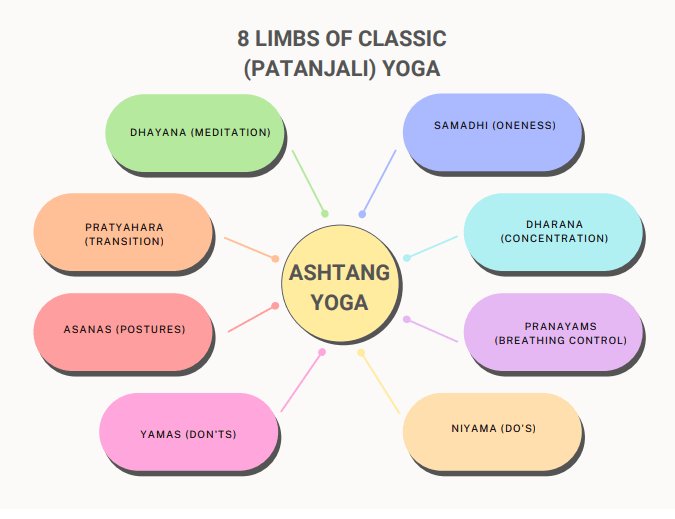
A simple map of Patanjali’s Ashtanga—integrating Yama, Niyama, Asana, Pranayama, Pratyahara, Dharana, Dhyana, and Samadhi.
The first four limbs have more focus on the physical aspect, the fifth limb is about transition from physical to meta physical and the last three limbs emphasize on the spiritual aspects and practices leading to the highest goal of divine oneness and liberation from samsara (cycle of births). These limbs are described below in brief.
Yama & Niyama – Foundations of ethical living and self-discipline.
Asana – Postures that harmonize & prepare body and mind for meditations.
Pranayama – Control and expansion of life-force through breath.
Pratyahara – Withdrawal of senses to turn awareness inward.
Dharana – Concentration and stillness of the mind.
Dhyana – Sustained meditation leading toward higher awareness.
Samadhi – Union with the Higher Self; blissful oneness beyond individuality.
“Through these eight organs, the practitioner gradually stills the mind and experiences the divine within.”
The Yoga Sutras:
This compendium has arranged the 195 sutras in 4 chapters:
Samadhi Pada – the first chapter consisting of 51 sutras, describes the concentration, the working of manas or mind and focusing on the Vrittis or fluctuations of mind which are the obstacles to be overcome in order to achieve Yoga.
Patanjali has defined yoga in the second sutra in a very simple but profound way, ” Yoga Citta Vritti Nirodha”; meaning yoga is stopping or overcoming of fluctuation of the mind, which simply means silencing or calming the mind.
It’s also important to note that Yoga is a discipline and the very first sutra shows it’s importance, “now the discipline / study of yoga begins” or the original Sanskrit sutra, ” atha yoga anu-sasanam”.
Sadhana Pada
The second chapter starts with sutra, “Tapah Svadhyaya Iswarapranidhanini Kriyayogah” meaning Self discipline, self study and devotion to God is Yoga of Action (kriya yoga).
Vibhuti Pada –
Kaivalya Pada –
YOGA- Practice of Asanas & Pranayam
Begin with Awareness mindfulness Prayers:
Be in the present moment; being fully aware of your body and mind,. take 3 deep breaths while being aware of the air quality (dryness, warmness or moisture) and movement of your belly or navel during inhalation and exhalation.
Warm up exercises:
- Shoulders rotation
- Neck movement (side ways, up & down, and circular)
- Elbows and wrists
- Chicken wings
- Upper body twist
- Hip rotation
- Yogic jogging / Flexing of Knees
- Ankles
- Jumping jack
- Hip opening – rocking baby in lap
Women Health
Dhanur-asana (Bow pose): benefits core, back, arms, legs, chest and the reproductive organs.
Makra-asana (Alligator pose): good for relaxation & reduces tension and anxiety while promoting good sleep.
Setubandh asana (Bridge posture) – good for hips, thyroid, legs, lower back
Nauka asana (Boat posture) – strengthens core muscles and the spine.
Bala asana (Kids posture): good for relaxation & reduces tension and anxiety while promoting good sleep.
Yoga Nidra – shava asan or the Corpse pose with mindful relaxation of every organ.
Adhomukha Svana-asana (Downward Dog pose): benefits core, back, arms, legs, chest and the reproductive organs.
Men Health (Obesity, Heart Health, Diabetes)
Obesity:
3 Deep breaths Kriyas
Pranayams:
Kapalbhatti –
Shitkari – cooling, calming and hunger reducing
Plank posture –
Shravang asana ( Quean of asanas) – good for thyroid, leg
Vipriti Karni mudra
Shavasana or yoga nidra
 Om Yoga & Healing